YFS401
Generic - Pulse counter NORMAL CLIMATE
Introduction
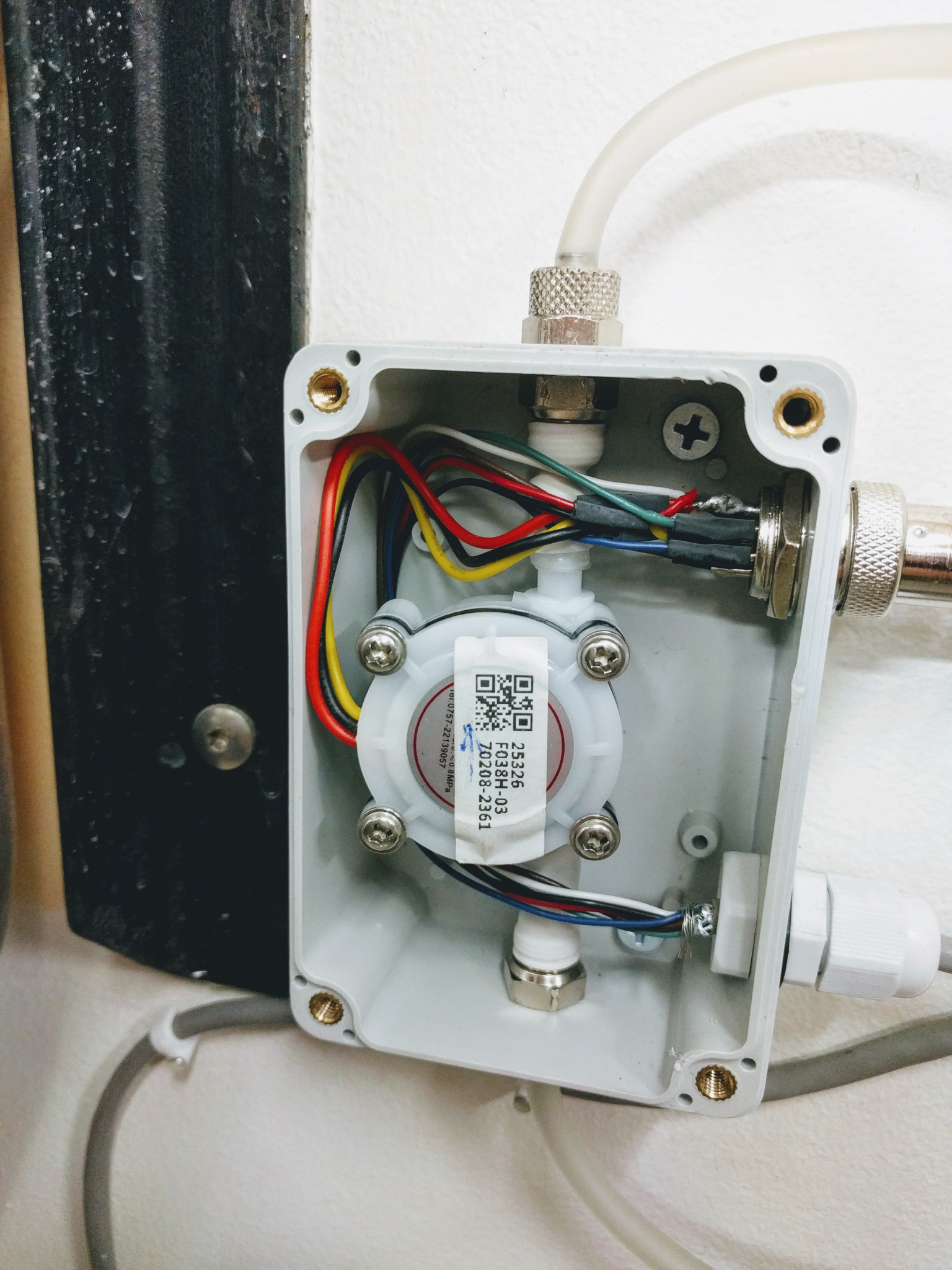
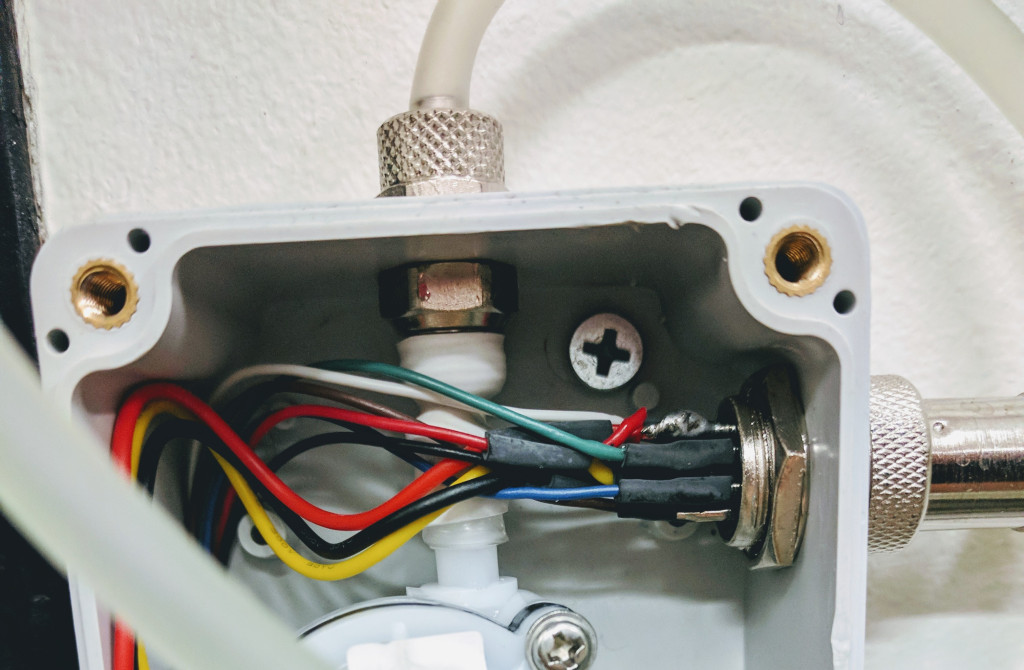
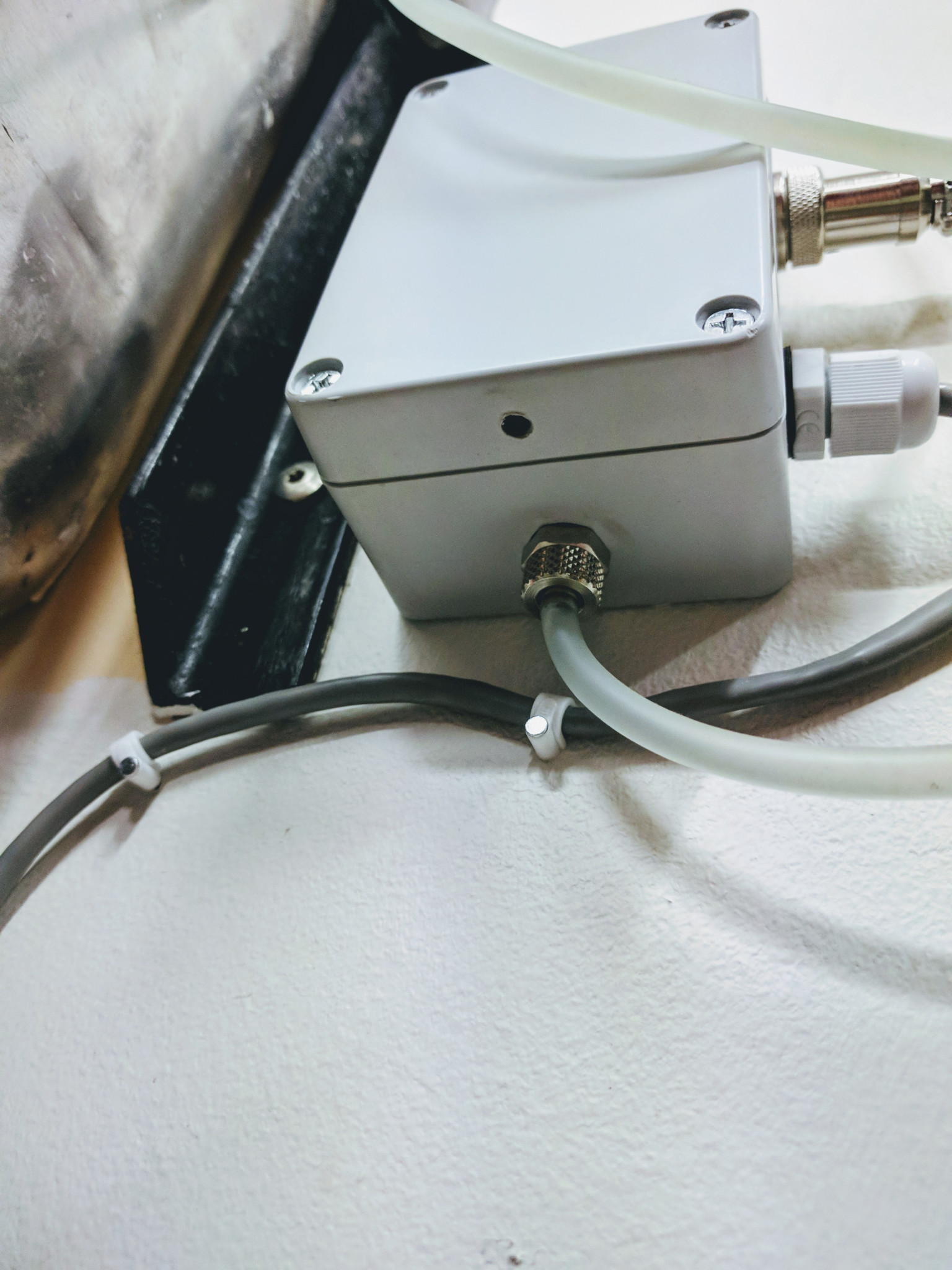
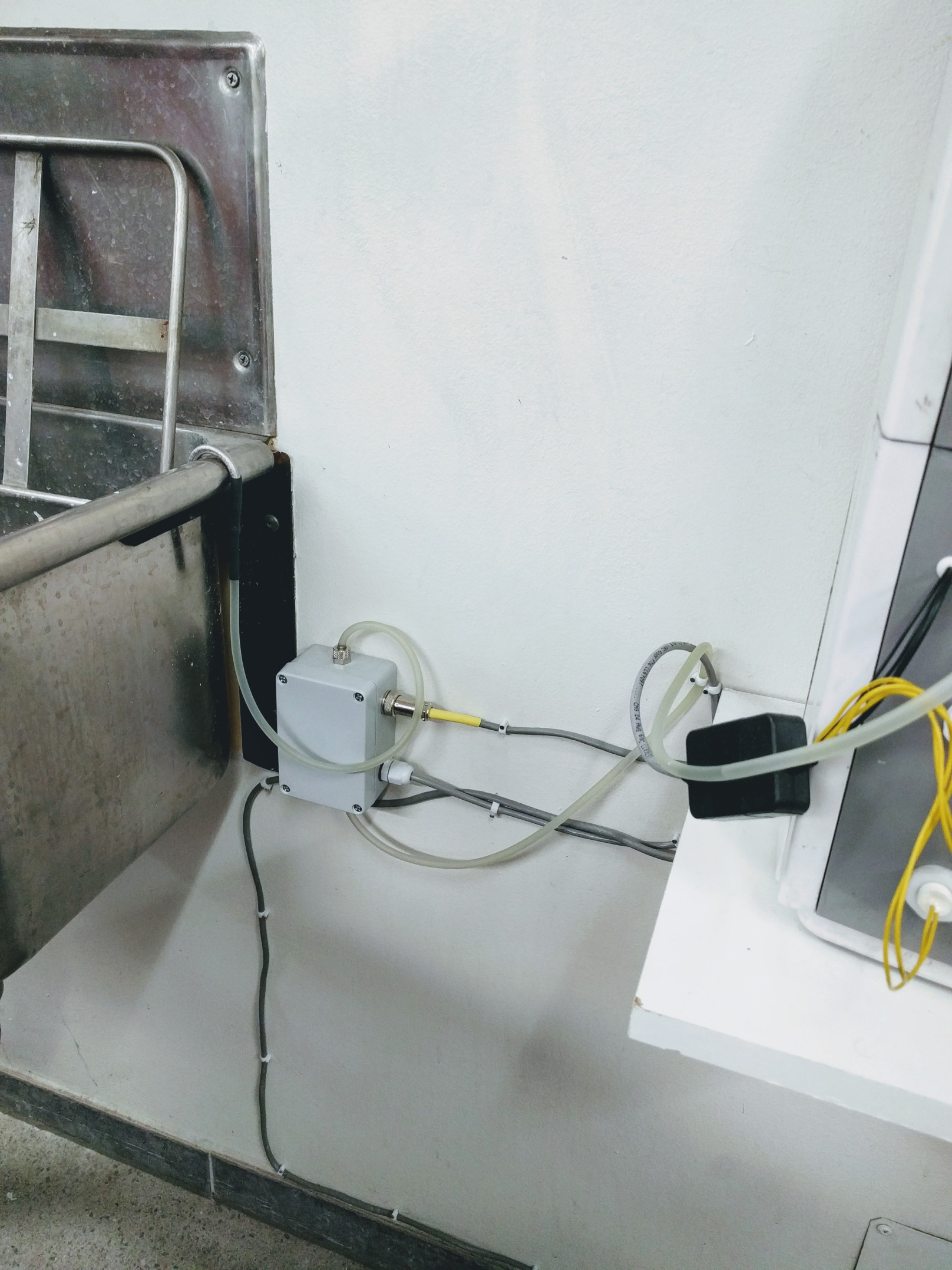
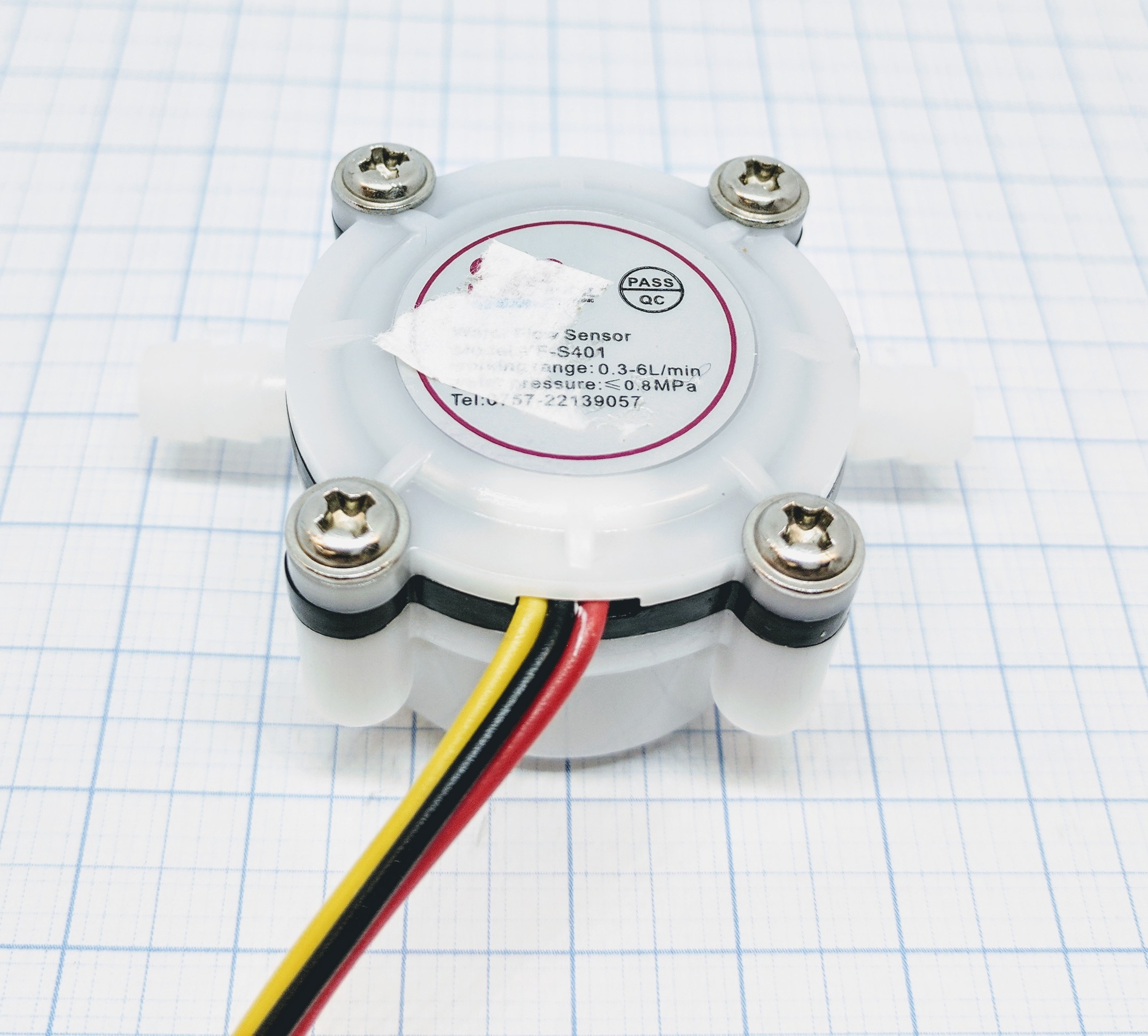
Just as the ESP may be used with specific pulse counters it may also be used with any generic pulse based unit as long as the pulses are not giving to high voltages. A generic 5V flow sensor that gives a pulse each complete revolution. You may have to measure what each revolution/pulse means in volume. The one used in this example is called YF-S401, a 5V unit, which is great to use for watering systems or in this case (pictured) to measure a drainage system.
- Specifications:
General, output as pulse
Min. working voltage: 4.5V
Max. working current: 15mA (5V)
Working voltage range: 5V-12V
Flow range detectable: approx. 0.3-6L/min
Wiring
ESP               YFS401
GPIO (14)  <-->   Signal (yellow)

Power
5.0V       <-->   VCC (red)
GND        <-->   GND (black)
Setup
Task settings
Device: Name of plugin
Name: Name of the task (example name WaterMeter)
Enable: Should the task be enabled or not
Sensor
Device: Name of plugin
Name: Name of the task (example name WaterMeter)
Enable: Should the task be enabled or not
Sensor
GPIO <– Pulse: Pulse input is generally set to GPIO 14 (D5).
Debounce time: Debounce time is generally set to 100.
Counter type: In this example the type is set to Delta/Total/Time.
Mode type: Pulse input is generally set to Falling or PULSE low
Change= count on signal being changed, low to high (0.8-V to 2.4+V) or high to low (2.4+V to 0.8-V)Rising= count if signal is rising, from low to not low (0.8-V to 0.8+V)Falling= count if signal is falling, from high to not high (2.4+V to 2.4-V)PULSE Low= count if a stable low signal ended followed by a stable high signalPULSE High= count if a stable high signal ended followed by a stable low signal.PULSE Change= count if the stable signal changes from high to low or from low to high
Warning
ESP8266 GPIO 16 (D0) is not compatible with pulse counters.
Data Acquisition
This group of settings are standard available configuration items.
Single event with all values: When this setting is enabled, all available values will be sent in a single event
<TaskName>#All, with all values in order as arguments to the event.Show derived values: When checked, the Devices overview page, and the
/jsonendpoint (used for updating the Devices overview page) will include any Derived values as defined. See theTaskValueSetDerivedandTaskValueSetPresentationcommands.Event & Log derived values: When checked, the Derived values will be generated as Events, to be handled in Rules, and sent to logging devices like the Syslog server and/or SD-card logging.
(The derived values options are only available if String variables feature is included in the build.)
Send to Controller: Select the Controller(s) to send the Values to, either on a
TaskRuncommand applied to the task, or on an Interval time action.
Send to Controller is only visible when one or more Controllers are configured.
Depending on the controller capabilities, some configuration settings may be shown:

All configured Controllers are shown here, including the enabled or disabled state (multiple Controllers can be enabled, only a single MQTT Controller can be enabled at one time!).
For each controller the user can select wether the data should be sent on each Interval (or explicit TaskRun).
For the Domoticz controllers the value index (IDX) has to be configured.
For some controllers, like Home Assistant (openHAB) MQTT, there are extra options available.
Group: This represents the group id to combine all values from multiple tasks into a single grouped-device during MQTT AutoDiscovery. Groups, by design, can span multiple ESPEasy devices, if desired, as long as the Task/Valuename combinations are unique. If a group should only combine Tasks from a single ESPEasy unit, the group id should be unique across multiple ESPEasy units. The group description, default Group <n>, can be adjusted in Home Assistant. If the Group value matches the current Unit nr, the Unit name,
%sysname%, is used instead of Group <nr>.When Group is used, the Discovery unique id, by default, doesn’t include the taskname, causing devices with the same Value name in the same group to be overwritten in the MQTT broker. By setting the checkbox MQTT Discover, Group incl. Taskname on the Tools/Advanced page, the unique id will be made ‘more unique’ by including the Taskname. (Not enabled by default for backward compatibility).
Retained: For MQTT Controllers, this setting can be enabled to send the values for the current task with the Retain flag set. The Publish Retain flag in the Controller settings will override this by sending all task values with Retain flag enabled.
Send derived: This checkbox determines if any configured Derived values should also be sent to the controller (and included in the AutoDiscovery if that’s available and enabled).
Resend MQTT Discovery: When checked, will initiate a resend of the MQTT Discovery process for this task after a random delay after Submit is clicked, so any changed settings will be updated in the MQTT broker. This setting is only available if the controller is enabled, the Auto Discovery feature is available and enabled for the controller. This setting is not stored.
Other controllers, like f.e. FHEM HTTP, do not support additional settings besides the checkbox to enable sending the data.
Interval: How often should the task publish its value (5..15 seconds is normal).
Indicators (recommended settings)
Indicator |
Value Name |
Interval |
Decimals |
Extra information |
|---|---|---|---|---|
Count |
mL |
5 |
2 |
Using the formula |
Total |
Total |
N/A |
1 |
Total value is the counted pulses since last reboot, for total in liters you could
use this formula |
Time |
Time |
N/A |
0 |
Time since last pulse was intercepted, in mSec.
.. note:: Only updated if counter type is set to |
Rules examples
 On WaterMeter#mL Do
  If [WaterMeter#mL]=0
    Publish,%sysname%/WaterStream/status,Water stream empty
  Else
    Publish,%sysname%/WaterStream/status,Water is life!
  EndIf
EndOn
Where to buy
Store |
Link |
|---|---|
AliExpress |
|
Banggood |
|
eBay |
$ = affiliate links which will give us some money to keep this project running, thank you for using those.
More pictures